“小盐人:直播卖盐艺术show”创作回顾
2024年,“述说空间”与“对角线计划”联合发起了基于互联社会的艺术介入实践与研究项目——beline线存,"beline线存"关切身份、情感、观念、想象等作为行动的互联社会个体与群体,试图用艺术回应当下时代的媒介景观。从今天起,我们会陆续分享其中一个项目“小盐人”的创作、策展、统筹等心得,欢迎大家关注。
本篇文章为艺术家彭玮雯的现场创作回顾。
The Little Salt Girl :A Live Stream Salt Art Show
Introduction of the members of the " The Little Salt Girl" project.
"The Little Salt Girl" Day 3: Impromptu Exhibition & Art Delivery
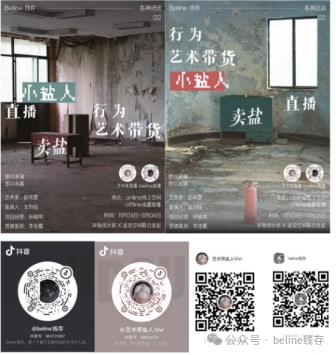
小盐人:直播卖盐艺术show
即兴表演
即兴布展
艺术家
彭玮雯
策展人
文均钰
项目经理
孙晓鸣
营销策划
李佳儒
小盐人:一场直播卖盐艺术show
材料:50kg食用散装盐,商品袋装盐,白裙,白鞋子,盐厂照片,纯净水,钢板,透明胶水,烂沙发,植物,工业废料,废弃物品
行为现场,装置艺术,综合材料,新媒体交互
2024
艺术现场
Beline废墟系列线上艺术介入项目
项目形式:艺术创作与行为表演直播,线上展览直播
直播平台:抖音,微信视频号等
项目时间:2024.11.04-11.06
创作概念
《小盐人》是一场融合行为艺术、装置艺术与社交媒体直播的综合项目,以成都工业废墟为背景,深入探讨劳动、身体与身份的多重意义。利用线上直播互动拓展艺术创作的新形态,为艺术实践开辟新的参与路径。
在项目中,我以“主播”的身份现场创作艺术作品,并结合直播电商,展示艺术创作与商品生产的对话,通过现场雕塑、装置制作和行为艺术展现劳动的具体性。将艺术创作与商品交易巧妙融合,模糊艺术与日常生活、物质与精神的边界。
这既是当代艺术作品的生产过程,也是一个临时展览的完整生成流程,涵盖创作、反馈、交流、布展、导览等环节。我希望观众能够通过线上直播,不仅观看,还能直接介入艺术品的创作现场。此举旨在打破当代艺术“工作室创作”这一私人化、封闭式的传统模式,挑战远离大众生活的“精英化当代艺术展览”,让艺术创作的过程变得开放可见。同时,通过社交媒体这一大众传播工具,探讨艺术介入社会议题的可能性。我希望触发观众对盐与艺术之间关系的思考。在直播销售盐的过程中,不仅能够宣传和推广自贡的盐文化与盐产品,还可以借助这一媒介,引导观众深刻反思劳动、工业遗产及其对个体与社区的影响。最终以艺术的形式连接起日常买卖(直播带货)的行为,实现对日常生活与艺术边界的再定义。
项目成员
策展人:文均钰Wen Junyu
“线上空间应该被更多地按照其自身的运行逻辑被利用,比如抖音直播间的功能、微信朋友圈的九宫格模式,而非复制一个和真实物理空间一样的虚拟空间。这是Beline线存计划对线上空间叙事所坚持的原则。我们探索互联网空间和物理空间的交叉或平行的“异托邦”。直播策展将一个安全、稳定、被设计的结果置于未知的、转瞬即逝的过程中。策展人将根据行为艺术产生的结果,根据场地条件即兴布展,作为行为艺术表演的延续。整个“小盐人:直播卖盐艺术show”将模糊线上、线下,台前、幕后,折叠空间透视,探索“策展性”的更多可能性。”
项目统筹:孙晓鸣kerribin
“我们已经完全沉浸在互联网社会与情境里了,生活,工作,所有方面都深度连接。对于正在经历的时代,人往往自然的享用它所带来的一切,而很难面对由此发生的种种不安。beline项目发起的初衷,是既经历又试图跳出来思考网络社会,由此对自身的处境也有更多的认识。”
营销策划:李佳儒Li Jiaru
“营销本身是一项上限高下限低的技艺,但是当这种技艺本身成为艺术创作的一环,新时代的传播媒介——互联网直播成为艺术创作的全新工具与素材,这时的艺术家要何去何从,又该以何种姿态接入这种商业社会?我们抱着这样的疑问,决心开始进行一些探索,比如从直播卖盐与艺术开始,尽管理性告诉我不要对成绩和成果抱有过分乐观的预期,但我始终心怀期待,希望能看到技术理性与艺术感性在商业规律的影响下被我们掌握并统合,最终成为多种技艺交叉融合后的登峰造极,希望那时可说,营销亦是艺术。”
表演过程
现场创作的即兴性与观念表达
我现场表演作品高度即兴,身体与空间、材料、历史之间形成了深刻的对话。这种即兴创作赋予作品流动性与多重解读的可能,使其能够随着现场环境和观众的参与而不断变化。通过虚拟传播与真实表演的结合,我创造了一个跨越物质与精神的交流平台。在表演过程中,我利用盐这一材料与废墟中的物体、植物及身体的互动,构建了装置、综合绘画、剧场和行为表演的空间。盐的结晶、溶解与变换,成为历史痕迹与劳动遗产的隐喻。在这个创作领域中,我希望通过盐的即兴表达,架起连接生命与死亡、记忆与遗忘的桥梁:
第一天
衣着与环境设置
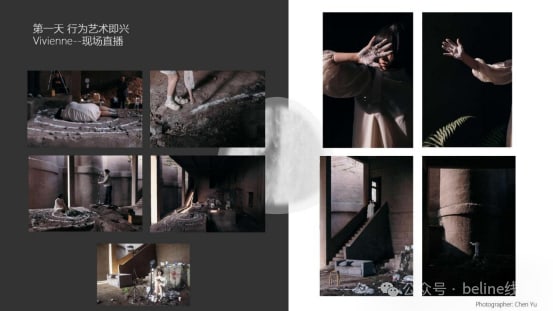
我身穿白裙和白鞋,象征盐的纯净特性,形成了与周围废墟粗糙环境的鲜明对比。在这个空旷、废弃的空间中,我感到略显局促,且试图通过创作将自我与环境联系起来。
过往创作的延续
之前的一些创作元素融入到表演中。我从一开始就着手通过《盐之痕》来留下自己身体的痕迹。也使用了《盐之息》的创作方法表演,探讨了呼吸与盐材料之间的关系,表现了身体与环境的互动。
照片实验
我进行一些盐与照片实验,利用盐与相纸之间的化学反应,将照片中的形象抽象化。在这一过程中,我将大颗粒盐与小颗粒盐结合,调整质感和细节。
装置创作
我使用盐处理装置,采用不同的手法,比如将装置浸泡在水中,再撒上盐,使盐附着在表面。通过这种方式,原本的工业材料(木材、垃圾等)被包裹在盐中,改变了形态。
剧场与空间关系建立
在找到空间与我身体之间的平衡后,我迅速使用盐将空间中的关键位置联系起来,初步构建了每个作品的定位与构思。考虑空间的氛围,也使用盐加强了作品之间的连贯性。
自然植物
我在表演中使用了杀死植物并用盐包裹,将其转变为一种“尸体”状态。植物的翠绿色与白色盐晶相结合,形成了强烈的视觉冲击。我围绕植物的死亡进行了祭祀式的表演,表达了对生命逝去的悲伤与悔恨。通过流泪和盐的处理,我将植物与盐、废弃空间紧密联系,形成了一种生死与记忆的象征。
行为艺术与口播环节
在行为艺术表演之后,我进行了口播环节,回应了观众在直播中对我的创作以及产品购买的疑问。我将这一环节视作表演的一部分,因为我模拟了网络主播的角色,向观众介绍自贡的盐文化和盐产品。通过这种身份转换,我不仅让观众更贴近我的创作过程,也让他们对我作为艺术家的形象产生了更深刻的反思。
第二天
填补未使用的空间
我继续填补第一天未使用的空间,进一步推进作品的深度,尤其是对大块墙面进行了改造。通过不同的痕迹留下方式,我增强了作品的视觉效果,使空间更加丰富。
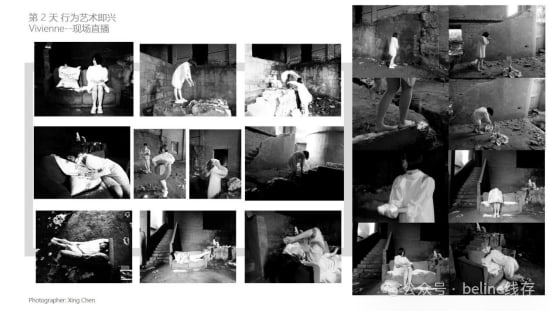
沙发上的系列表演:我在沙发上进行了系列表演,通过与严的互动,探讨身体与语言之间的关联。盐的大量残留物附着在沙发表面,成为艺术创作的一部分,进一步加强了作品的物质性与触感。
翻模技术应用
我使用翻模技术,将身体的符号转化为艺术残留,这种技术手段强化了作品的触感与象征意义,深刻表达了身体与空间的互动。
盐文化的讲解与历史介绍
在口播过程中,我以自贡盐的历史为切入点,讲解了盐文化的象征意义及其对当地社会的深远影响,同时探讨了工业废墟的现状。
直播带货与互动
通过模拟网络主播的方式,我将盐产品进行推广。直播内容采用多机位视角,从废墟全景、艺术家身体动作的细节到盐产品的特写,通过这些不同的视角,使观众能够更深入地理解作品和产品。
第三天
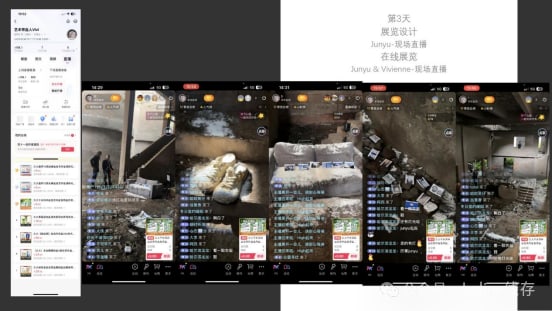
盐与钢板画创作
在第三天,我没有进行表演,而是专注于创作一件新作品——盐与钢板的结合。这一作品利用盐的腐蚀性强化了工业化与时间的冲突,象征着物质的老化与历史的痕迹。
策展与布展过程
策展人兼展览设计师负责了现场的展览设计与布展工作。我担任摄影师,记录并跟踪策展人对展览设计与布展过程的执行。虽然我在创作过程中有考虑到作品的呈现,但在空间的安排与展览的专业呈现上远不足策展人擅长。在这一天,策展人和她的团队为我的作品选择了合适的展示位置,做出筛选、调整位置标号,并规划了展览的动线。这一过程也进行了直播,让观众也能看到如何通过专业的策展布置将作品呈现出其最佳状态。
多媒体呈现与线上导览
为了增强观众的沉浸感,策展团队使用灯光、投影仪等设备,将我第一天和第二天的行为艺术过程通过多媒体方式投射到墙面上。这一呈现方式让我非常惊喜。在完成布展后,我们提供了线上导览,详细讲解了展览设计理念、项目宗旨及每件作品的创作意义与概念。此外,我通过直播与观众实时互动,回答他们的评论并介绍展览内容。
线上与线下展览的讨论
通过全程在线的方式,我们讨论了线上与线下展览之间的差异,探索了虚拟展览是否能够突破传统展览的认知局限。这种从真实到虚拟的转化方式,不仅改变了观众的参与体验,也为展览的未来形式提供了深刻的思考。
空间与材料布局
1.废墟空间:象征意义与复杂结构
首先,废墟空间本身就具有极为鲜明的特性与独特性,呈现出死亡、荒凉的气息,象征着人去楼空后的破败景象。这种空间自带强烈的时间标签和复杂内涵,正好与我的作品主题——工业背景与历史变迁紧密相关,同时也承载着个人记忆与群体记忆的深刻联结。第二点,在这个空间中非常有趣的是复杂的结构。例如双层空间,多个仿真“展台”、遗留的水池,以及破旧但透光的天花板。这种去除了工业设备后残存的丰富场域,不是简单的“白盒子”空间,而是一个既开放又具体的环境。在这样复杂的场域中,我有很多的走位表演的走位和作品的设置,都有要考量它原本的地形特点。场地内散布着破旧的沙发、水池、植物、台阶等原有元素,它们作为劳动历史的象征,与盐文化符号形成对话。通过这些元素,荒凉的场景更能突显时间的变迁和荒凉残酷。在这样的工业遗址中,空间不仅是作品的背景,更是记忆与情感的具象化表达。
2.临时展台:图像与物的展示
废墟中的展台为作品提供了便利的展示空间。例如,我在展台上制作照片与装置作品,会使我和作品都在这个创作过程中变为视觉中心。而平地部分则成为行为表演和装置展示的区域。一个破旧沙发成为了特殊的象征——它在家庭记忆与荒凉场地之间形成鲜明对比,因此我也选择在沙发上进行表演。后来,这个沙发本身也成为了一个展台。通过利用废弃物和盐厂的老照片,我构建了一个融入历史与现实痕迹的装置艺术场景,增强了空间的叙事性与视觉冲击力。
3.临时展墙:身体痕迹与多层次投影
有一面强相对较为空旷,但具有凹凸不平的特点。我选择在这面墙上创作并保留“盐之痕”系列的身体痕迹。这一选择不仅是因为这面墙便于记录和存留这些痕迹,还因为它为不同类型的身体轮廓和痕迹提供了展示的可能性。在创作过程中,我利用两天的时间,在不同时段对墙面进行创作,以身体与墙壁的接触留下印迹。这些痕迹随着时间的推移可能会逐渐脱落,与“盐之痕”系列的主题密切相关——身体的存在、时间的流逝以及记忆的消散。
另外一面墙平坦,为了更好地呈现我的创作过程,策展人决定利用这面墙进行投影,将我第一天的创作过程以及制作行为艺术的过程通过多媒体的方式投射到墙面上。这一创新的方式让我感到非常惊喜。投影不仅使得我的创作过程得以实时呈现,还赋予了作品更多的层次感和动态感。这种方式打破了传统展览中静态展示的局限,作品形成多维层次。
4.临时剧场:符号化舞台
在展厅的中央,有一个方形台子,它在整个空间中显得格外突出。因此,我将这个台子不仅作为展台,还构建成一个剧场和舞台。我在其中使用了螺旋这一特殊符号,旨在将整个空间的视觉焦点集中于此。螺旋对于我来说一个具有强烈象征意义的视觉符号,是一个时间痕迹的象征。螺旋形状像水流般动感,整个空间仿佛变成了一个能量集中的场域。这个展台旁边还有一个水池,与螺旋符号相互呼应。我拔起附近的蕨类植物并放置螺旋符号的中央,进行了一场关于生命的祭奠活动。这一举动与我之前的《超度》作品有着直接的关联,因此,整个展场呈现出一种宗教仪式的氛围。
5.临时装置:废弃物的转化
在创作过程中,我着重探索与废弃材料和空间的关系。废墟中原本散落着日常垃圾和工业废料,我还从周边社区收集了一些废弃材料,将它们带入空间进行创作。两天内,我完成了多个即兴装置,根据材料的形状和象征意义进行拼接。在创作过程中,我将我的肢体表演与装置相结合,创造了一种互动感。尤其是在螺旋状舞台的制作之前,我与第一个装置作品之间建立了联系。线条与形态的相互关联,使得我的叙事顺序得以体现,同时也引导观众的浏览动线。这些装置不仅仅是物理空间的填充,它们更是承载了我的创作思考与对空间的反应。
6.虚拟扩展:线上艺术传播的空间叠加
通过抖音和微信视频号的直播,我多视角记录了现场表演,包括作品创作、装置布置和行为动作。线上观众不仅能实时参与,还能通过弹幕、点赞等方式与艺术家互动,实时反馈他们对创作的评价。在这一环节中,我以盐的历史为切入点,介绍自贡盐文化的象征意义及工业废墟现状,并模拟网络主播带货的形式推广盐产品。直播内容以多机位视角展现,从废墟全景到艺术家身体动作的细节,再到盐产品的特写,将材料性、行为偶发性与观众即时反馈转化为叙事的连续性,引导观众反思艺术与日常生活的边界。
7.虚拟扩展:观众参与与口播销售环节
回应观众提问和专用的口播销售环节,我以盐的历史为切入点,介绍自贡盐文化、盐的象征意义以及工业废墟现状。展示盐产品与艺术品的融合,吸引观众关注。盐产品推广,模拟网络主播带货宣传产品。艺术家与策展人现场回答观众提出的关于艺术与劳动、商品化问题的讨论。直播镜头捕捉了盐的物质性、行为的偶发性以及观众的即时反馈,线上互动将这些动态元素转化为叙事的连续性。视频内容展示盐从普通商品到艺术品的转化过程,引导观众思考艺术与日常生活的界限。
8.展览呈现:线上空间
通过抖音和微信视频号的直播,多视角记录了我的现场表演,包括作品创作、装置布置和行为动作。线上观众不仅能实时参与,还能通过弹幕、点赞等方式与艺术家互动,实时反馈他们对创作的评价。在线下空间中,我没有邀请现场观众,而是用手机摄像机代替他们的视角,呈现艺术创作的过程,因此现场仅有摄影师参与,他们通过手机的镜头为观众展示空间。在展览中,我们使用了微距镜头,记录了盐在不同材质表面(如钢板、植物和废弃物)上的沉积与结晶,突出材料细节的变化。同时,通过多机位的拍摄,我们记录了工厂废墟中的表演场景,捕捉盐的散布与空间痕迹之间的互动。在直播画面设计方面,我们切换了全景废墟、艺术家身体的近景以及盐产品的特写,增强了线上观众的沉浸感。
盐艺术的视觉语言与叙事符号
盐作为材料的创新性与象征意义
盐不仅是一种普遍的物质,它在我的创作中成为了独特的艺术语言。盐的特性——如溶解、附着、结晶、腐蚀等,构成了盐艺术的核心表现形式。在本次创作中,盐不仅是一个材料,更是一个富有象征意义的符号。
盐与相纸的化学反应
我通过利用盐与照片相纸的化学反应,使得照片中的形象变得抽象化。通过调整画面和眼的位置,我结合了大颗粒盐和小颗粒盐,进一步修改了作品的综合质感,形成了独特的视觉效果。
装置的盐处理
我将盐与装置结合,采用浸泡和撒盐的方式,使盐附着在原本粗糙的工业材料、木头和垃圾表面,改变了它们的形态和颜色,转变为纯白的雕塑,打破了它们原本的样貌,形成一种新的视觉语言。废弃物表面由于盐的覆盖,转化成一种新的质感,呈现出一种自然与工业交织的美学。
盐和死亡
在创作过程中,我使用了植物,并与盐结合。通过“杀死”植物,使它们与废弃空间中的物品融合。当盐附着到植物上时,它们变成了白色,仿佛成为了死亡的象征,形成了新的尸体。盐的白色代表了纯洁、死亡和遗忘。通过植物和身体的结合,我将生命与死亡之间的界限模糊化。植物的死亡和盐的转化形成了一种新的生命体,象征着死亡的再生与变形。
盐和剧场仪式
我通过表演的方式围绕植物展开,第一场祭祀活动通过对植物死亡的反应进行情感表达,感受到了对死亡的悲伤与残忍。第二场祭祀,我使用盐将另一种植物转变为白色,完成了这场仪式。
盐介入工厂废墟
盐的纯净与废墟的粗糙形成了鲜明的对比,盐的纯白色使其在废墟环境中显得格外醒目,形成强烈的视觉对比,隐喻了工业化对自然资源的提取与遗弃。盐撒向废墟地面,与潮湿环境中的水和胶水结合,形成结晶纹理。盐不仅是物质的痕迹,也是时间和记忆的象征。盐的溶解与堆积象征着劳动的流逝和历史记忆的沉积,而废弃工厂的锈迹与盐晶的交织,意外呈现了“时间沉淀”的视觉效果。盐与废弃工厂、废墟的结合,不仅展现了历史的痕迹,也表达了对工业化遗留物的思考。废弃物和盐的结合,象征了时间的流动与记忆的流失,提醒人们反思过去的历史和人类活动对环境的影响。
钢板腐蚀盐画与时间
通过盐腐蚀钢板的作品,我展现了工业化的痕迹与时间的冲突。盐的腐蚀性象征着人类活动对自然的侵蚀,而钢板的抗性则代表了工业化的坚硬与持久。二者的结合形成了一种视觉上的张力,反映了工业化遗留物和历史的沉淀。
即兴表演与身体的痕迹
盐不仅作为一种物质的存在,也承载着更为复杂的情感和哲学内涵,使我的创作不仅是对材料的实验,更是对生命、历史和时间的深刻反思。
身体的转化
在我与空间、材料的互动中,身体不仅是创作的载体,更是故事的讲述者。盐通过与身体的结合,成为了身体的延伸,象征着人类与环境的紧密联系以及身体作为艺术创作的核心载体。在翻模过程中,我通过盐将身体的形态转化为雕塑,这一过程并非完美,反而增添了作品的意外性和不确定性。盐的形态成为身体的痕迹,带着流动性和动态感,记录了我在空间中与物质互动的过程。
抛洒与残留
我通过抛洒盐的方式,将自己的身体残留在空间中,形成正负形状,这不仅与物质材料互动,也与空间产生亲密关系。通过和盐的肢体接触,盐在我的身体表面残留,也随着我的行动在场域中残留。盐的附着象征着身体的存在与痕迹。这都是自我,时间和生命的联系。
亲密与对抗
我的表演类似从亲密到割裂、从痛苦到平静的经历,探索了身体、空间与物品之间的深层次关系。盐与身体之间的互动不仅反映了个体生命流动,也象征着我的肉身的记忆和存在的脆弱性。盐在身体上的造成直接的伤害和规训,呈现了脆弱与不完整,也探讨了身体与劳动和环境之间的联系。
盐与痕迹
我通过在楼梯上留下盐的脚步印记,在墙面上留下人形的痕迹。使用正型和负型两种形式,记录了我的身体移动轨迹。正型使痕迹不太可见,而负型则做出镂空的轮廓,这些痕迹体现了身体在空间中的时间性与脆弱感。
对未来创作与研究的影响
艺术创作与商业融合的新路径
这通过将艺术创作与直播电商结合,艺术家能够直接与观众互动,展示创作过程并推广商品文化。这种方式打破了艺术展示的传统模式,推动艺术走向大众化和互动化。未来艺术创作将更多依赖社交媒体平台,结合商业产品并提升社会影响力,创造新的商业化路径。并且我们探讨了新时代艺术家如何在商业化社会中找到自己的定位。艺术家的营销与传播不再是传统的艺术品推介,而是成为艺术创作的一部分,这为未来艺术家的创作方式和商业化路径提供了新思路。
虚拟空间与物理空间的交融
项目中的线上直播和线下行为艺术表演,探讨了虚拟空间与物理空间的交错与融合。通过直播和社交媒体的虚拟传播方式,观众能够实时参与艺术创作的过程,打破了物理展览空间的局限。这一探索为未来展览和艺术实践提供了新的视角,尤其是在后疫情时代,虚拟展览和线上艺术活动可能成为未来艺术研究的重要方向。如何平衡线上与线下展览的互动,如何在虚拟空间中创造出沉浸式的艺术体验,将成为未来艺术创作与展览研究的重要议题。
打破艺术创作的传统角色界限
传统艺术创作往往是艺术家主导的创作过程,而通过参与式艺术项目,观众不仅仅是被动的接受者,更是创作过程中的主动参与者。虚拟社区为观众提供了一个便捷的参与平台,艺术创作不再是一个封闭的过程,而是一个持续发展的、与观众互动的创作实践。通过这种反馈机制,艺术家能够更好地与社会和时代对话,使艺术作品更加贴近观众的需求和情感。
参与式艺术项目介入虚拟社区
虚拟社区的介入让艺术创作成为一个社交活动,艺术家和观众、观众与观众之间通过互动建立联系,形成艺术创作中的共同体。通过社交平台和在线互动,艺术家不仅能与观众建立更深的联系,还能激发观众之间的讨论与交流。虚拟空间的加入为艺术创作打开了新的视野,艺术家可以通过网络直播、社交媒体等渠道实现全球观众的互动,这种跨越地域的互动性使得艺术创作的传播与影响力得到了极大的拓展。
对社会议题的艺术介入与反思
通过这一项目,艺术家不仅展示了盐的文化与工业背景,还引发了对劳动、历史、工业遗产以及社区影响的深刻反思。未来的艺术创作可以更多地借助线上平台,利用其广泛的传播性和即时反馈性,积极介入社会议题。通过艺术作品的展示与观众的互动,艺术家能够引导社会对某些问题的关注,从而推动社会的集体反思和行动。
彭玮雯
Vivienne Peng
普利茅斯大学当代艺术在读博士生,四川美术学院实验艺术专业硕士, “对角线计划Diagonal”联合发起人。四川自贡盐厂与三线电碳厂的工人后代。
实验艺术家,现目前运用行为,装置,影像与新媒体等跨媒介语言进行在地性艺术创作。主要创作材料为盐、煤炭、炭黑与工业废弃材料。博士课题研究从东北到西南的后国营工业社区的社会介入性艺术。关注中国建国时期的东北工业到三线建设时期的西南之后的当代工业叙事,探索个体生命溯源与地方性社群文化的生态与关联。流动居住于英国,欧洲与中国。
The Little Salt Girl :A Live Stream Salt Art Show
Materials:50kg of bulk edible salt,packaged salt,white dress,white shoes,photos of salt factories,purified water,steel plate,transparent glue,worn-out sofa,plants,industrial waste,discarded items.
Live performance,installation art,mixed media,new media interaction 2024
Exhibition Experience: Beline Ruins Series Online Art Intervention Project Project Format:Art creation and performance live streaming,online exhibition live streaming Live Streaming Platforms:Douyin(TikTok),WeChat Video Channel Project Duration:November 4–6,2024
Concept:
The Little Salt Man is an interdisciplinary project that combines performance art,installation art,and social media live streaming.Set against the backdrop of Chengdu's industrial ruins,it explores the complex meanings of labour,the body,and identity.The project uses live streaming interaction to expand the form of artistic creation,opening new paths for participation in the art world.
In this project,I perform as a"host,"creating art live while integrating livestream e-commerce.This showcases the dialogue between art creation and product manufacturing,presenting the specificity of labour through live sculpture,installation making,and performance art.It cleverly blends art creation with commodity trading,blurring the boundaries between art and daily life,material and spirit.
This is both the production process of contemporary art and the complete process of a temporary exhibition,including creation,feedback,communication,display,and guided tours.I aim for the audience to engage not only by watching the livestream but by directly intervening in the art-making process.This breaks the traditional,private,and closed model of"studio creation"in contemporary art,challenging the"elitist"contemporary art exhibitions disconnected from everyday life.Through social media,I explore the potential of art engaging with social issues.I hope to provoke thoughts on the relationship between salt and art.In the process of livestreaming salt sales,this not only promotes Zigong’s salt culture and products but also uses the medium to guide the audience to deeply reflect on labour,industrial heritage,and its impact on individuals and communities.Ultimately,the project connects daily buying and selling(live commerce)with art,redefining the boundary between daily life and art.
Project Team: Curator Wen Junyu:"Online spaces should be utilised according to their own logic,such as the functions of Douyin livestreaming rooms or WeChat's nine-grid format,rather than replicating a virtual space that mirrors real physical spaces.This is the principle of Beline's online narrative approach.We explore the intersection or parallel'heterotopia'of internet space and physical space.The curator places a safe,stable,designed result in the unknown,fleeting process of livestreaming.The exhibition setup will be improvised based on the performance outcomes and venue conditions,extending the performance into the exhibition space.The entire project,The Little Salt Man:Live Stream Salt Art Show,blurs the lines between online and offline,stage and backstage,and folding spatial perspectives,exploring more possibilities in'curatoriality.'"
Project Coordinator Sun Xiaoming(Kerribin):"We are fully immersed in the internet society and its environment,where all aspects of life and work are deeply connected.In this era,people often enjoy all that it brings,yet it's hard to face the unease that arises from it.The origin of the Beline project is to experience and also reflect on the internet society,bringing more awareness to our own situation."
Marketing Planner Li Jiaru:"Marketing is a skill with high potential but also a low floor.But when this skill becomes part of art creation,the new medium for communication—online livestreaming—becomes a novel tool and material for artistic creation.As artists,how should we approach this commercial society?With these questions,we decided to start exploring,for instance,through livestreaming salt sales and art.Despite knowing that I shouldn’t hold overly optimistic expectations for results,I am still hopeful to see how we can manage and integrate the rationality of technology and the sensibility of art under the influence of commercial laws,ultimately creating something extraordinary from the intersection of multiple skills.In the end,I hope we can say,'Marketing is also art.'"
Performance Process
The live creation is highly improvisational,forming a profound dialogue between the body,space,materials,and history.This spontaneity gives the work fluidity and multiple interpretations,allowing it to change with the environment and the participation of the audience.By blending virtual transmission with real performance,I created a platform for communication that bridges the material and spiritual.During the performance,I interacted with the salt and the objects,plants,and bodies in the ruins,constructing a space for installation,mixed media painting,theatre,and performance.The crystallisation,dissolution,and transformation of salt serve as metaphors for historical traces and the labour legacy.In this creative field,I hope to use salt's improvisational expression to build a bridge connecting life and death,memory and oblivion.
Day 1
Attire and Environmental Setting:I wore a white dress and white shoes,symbolising the pure qualities of salt,creating a stark contrast with the rough,industrial environment around me.In this vast,abandoned space,I felt somewhat constrained,and I tried to connect myself with the surroundings through my creative work.
Continuity of Past Creations:Some elements from my previous works were incorporated into this performance.From the beginning,I aimed to leave traces of my body in the piece Salt Marks.I also employed the creative methods from Salt Breath,exploring the relationship between breath and the material of salt,and highlighting the interaction between body and environment.
Photographic Experimentation:I conducted some experiments with salt and photography,using the chemical reaction between salt and photographic paper to abstract the images in the photos.During this process,I combined large and small grains of salt to adjust the texture and details.
Installation Creation:I used salt to treat the installation,employing different methods such as soaking materials in water and sprinkling salt over them to make it adhere to the surface.This transformed industrial materials(wood,rubbish,etc.)by encasing them in salt,changing their form.
Theatre and Spatial Relationships:After finding the balance between the space and my body,I quickly used salt to connect key points in the space,laying out the initial positioning and concepts for each work.Considering the atmosphere of the space,I also used salt to strengthen the coherence between the pieces.
Natural Plants:In the performance,I used plants twice—killing them and wrapping them in salt,turning them into a"corpse"state.The vivid green of the plants combined with the white salt crystals created a strong visual impact.I performed a ritual around the death of the plants,expressing sadness and regret over the loss of life.Through tears and the application of salt,I tightly linked the plants with the salt and the abandoned space,creating a symbol of life,death,and memory.
Performance Art and Commentary:After the performance,I held a commentary session,responding to viewers’questions about my work and the product sales.I treated this segment as part of the performance itself,as I adopted the role of a livestream presenter,introducing the salt culture and products from Zigong.Through this role transformation,I not only brought the audience closer to my creative process,but also encouraged deeper reflection on my image as an artist.
Day 2
Filling Unused Space:I continued to fill the spaces from Day 1 that had not been used,further deepening the works,particularly focusing on transforming large wall sections.By leaving different types of traces,I enhanced the visual impact of the works,making the space feel richer.
Series of Performances on the Sofa:I performed a series of actions on the sofa,interacting with Yan,exploring the relationship between the body and language.The substantial residue of salt that remained on the surface of the sofa became part of the artwork,further emphasising its materiality and tactile quality.
Application of Moulding Technique:I used moulding techniques to transform body symbols into remnants of art.This method strengthened the tactile quality and symbolic meaning of the work,expressing the interaction between body and space in a profound way.
Salt Culture and Historical Introduction:During the commentary,I introduced the history of salt in Zigong,explaining the symbolic significance of salt culture and its profound impact on the local community.I also explored the current state of the industrial ruins.
Livestream Sales and Interaction:Through a simulated livestream presenter role,I promoted the salt products.The livestream was shot from multiple angles,including panoramic views of the ruins,detailed shots of my body movements,and close-ups of the salt products.These varying perspectives allowed the audience to gain a deeper understanding of both the artwork and the products.
Day 3
Salt and Steel Plate Artwork Creation
On the third day,I did not perform but focused on creating a new piece—combining salt and steel plates.This artwork uses the corrosive properties of salt to emphasise the conflict between industrialisation and time,symbolising material ageing and historical traces.
Curating and Exhibition Setup Process
The curator and exhibition designer took charge of the exhibition design and setup.As the photographer,I documented and followed the curator's execution of the design and setup process.Although I considered the presentation of the artwork during the creative process,I was far less skilled in spatial arrangement and professional exhibition display compared to the curator.On this day,the curator and her team chose appropriate display positions for my work,made selections,adjusted position labels,and planned the exhibition's flow.This process was also streamed live,allowing the audience to witness how professional curation could present the artwork in its best form.
Multimedia Presentation and Online Tour
To enhance the audience's immersion,the curatorial team used lighting,projectors,and other equipment to project the performance process from the first and second days onto the walls.I was delighted by this approach.After the exhibition setup,we offered an online tour,providing detailed explanations of the exhibition's design concept,project purpose,and the meaning and ideas behind each piece.Additionally,I interacted with the audience in real-time through live streaming,responding to their comments and introducing the exhibition's content.
Online and Offline Exhibition Discussion
Through the fully online format,we discussed the differences between online and offline exhibitions,exploring whether virtual exhibitions could break through the cognitive limitations of traditional exhibitions.This shift from physical to virtual transformed the audience's participation experience and offered profound reflections on the future forms of exhibitions.
Spatial and Material Layout
1.Ruins Space:Symbolism and Complex Structure
The ruins space itself has striking characteristics and uniqueness,exuding a sense of death and desolation,symbolising the decay after human presence.This space inherently carries a strong time tag and complex connotations,perfectly aligning with the theme of my work—industrial background and historical changes—while also carrying deep connections to personal and collective memory.
The space is also intriguing due to its complex structure.For example,there are double-level spaces,multiple simulation"display platforms,"leftover water pools,and a dilapidated but translucent ceiling.This rich environment,stripped of industrial equipment,is not a simple"white-box"space but an open yet specific environment.In such a complex setting,many of my performance positions and the arrangement of works had to take the original terrain features into account.Scattered throughout the site were worn sofas,water pools,plants,stairs,and other original elements,which symbolise labour history and engage in a dialogue with the salt culture.These elements enhanced the desolate scene,highlighting the passage of time and the harshness of decay.In this industrial ruin,the space not only serves as a backdrop but also as a concrete expression of memory and emotion.
2.Temporary Exhibition Platforms:Image and Object Display
The display platforms in the ruins provided convenient spaces for exhibiting my work.For instance,placing photos and installation pieces on the platform made both me and my work the visual focus of the creation process.The flat area was used for performance and installation displays.A worn sofa became a special symbol,forming a sharp contrast between family memories and the desolate environment,which led me to choose it as a performance space.Later,this sofa also became a display platform.Using discarded materials and old photos of the salt factory,I created an installation art scene that integrated historical and contemporary traces,enhancing the narrative and visual impact of the space.
3.Temporary Exhibition Wall:Body Marks and Multilayered Projections
One wall was relatively empty but had uneven features.I chose this wall to create and retain the body marks from the"Salt Traces"series.This choice was made not only because it was ideal for recording and preserving these marks but also because it provided an opportunity to display different types of body outlines and traces.Over the course of two days,I made marks on the wall at different times,leaving imprints from the contact between my body and the wall.These marks gradually faded over time,closely related to the"Salt Traces"theme—body existence,the passage of time,and the fading of memory.
Another smooth wall was used for projections.The curator decided to project the creative process and the performance art process from the first day onto this wall through multimedia.This innovative approach delighted me.The projections not only allowed the creative process to be presented in real-time but also added layers and dynamism to the work.This method broke through the limitations of traditional static displays and created a multidimensional presentation.
4.Temporary Theatre:Symbolic Stage
In the centre of the exhibition space,there was a square platform that stood out within the entire environment.I decided to transform this platform into both a display platform and a stage.I used the spiral symbol within this space to focus the visual attention here.For me,the spiral is a symbol with strong significance,representing traces of time.The spiral,like flowing water,brings a dynamic sensation,making the whole space feel like an energy-concentrated environment.Next to this stage was a water pool,which resonated with the spiral symbol.I pulled up nearby ferns and placed them at the centre of the spiral,conducting a ritual to honour life.This action directly connected with my previous work,"Transcendence",creating a religious atmosphere within the space.
5.Temporary Installations:Transformation of Waste Materials
During the creative process,I focused on the relationship between discarded materials and space.The ruins were scattered with everyday trash and industrial waste,and I also collected some discarded materials from the surrounding community to bring into the space for creation.Over the course of two days,I completed multiple impromptu installations,piecing them together based on the shape and symbolic significance of the materials.In the process,I combined my physical performance with the installations to create an interactive experience.Particularly before the construction of the spiral stage,I established a connection between myself and the first installation piece.The interrelation of lines and shapes reflected my narrative sequence,guiding the audience's movement through the space.These installations were not just physical space fillers;they carried my creative reflections and reactions to the space.
6.Virtual Extension:Online Art Dissemination and Spatial Overlay
Through live streaming on platforms like Douyin and WeChat Video,I recorded my performance from multiple perspectives,including artwork creation,installation setup,and performance actions.Online viewers were able to participate in real-time,interacting with me through comments,likes,and other forms of engagement.During this session,I introduced the history of salt,discussing the symbolic significance of Zigong's salt culture and the state of industrial ruins.I also simulated an online sales pitch for salt products.The live content was shown from various camera angles,from panoramic views of the ruins to close-ups of my body movements,and detailed shots of salt products,transforming the materiality,spontaneity of action,and audience feedback into a continuous narrative.This led the audience to reflect on the boundaries between art and everyday life.
7.Virtual Extension:Audience Participation and Broadcast Sales Segment
Responding to audience questions and the dedicated sales broadcast segment,I introduced the history of salt,the symbolic significance of Zigong's salt culture,and the state of industrial ruins.I also showcased the integration of salt products with artworks,attracting viewers'attention.The promotion of salt products took on the style of an online sales pitch.The artist and curator answered questions posed by the audience,discussing topics related to art,labour,and commodification.The live broadcast captured the materiality of salt,the spontaneity of actions,and the audience's real-time feedback,turning these dynamic elements into a continuous narrative.The video content showcased the transformation of salt from a common commodity to an artwork,prompting the audience to consider the boundaries between art and daily life.
8.Exhibition Presentation:Online Space
Through live streaming on Douyin and WeChat Video,I recorded my on-site performance from multiple perspectives,including artwork creation,installation setup,and performance actions.Online viewers not only participated in real-time but also interacted with me via comments,likes,and feedback.In the offline space,I did not invite on-site spectators but used a mobile camera to replace their perspective,presenting the creative process.Only the photographer was present,and they showed the space to the audience through the camera.In the exhibition,we used macro lenses to document the deposition and crystallisation of salt on different surfaces,such as steel plates,plants,and waste materials,highlighting the changes in material details.Additionally,we captured the performance scenes in the factory ruins through multi-camera filming,recording the interaction between salt dispersion and spatial traces.In the live broadcast,we switched between panoramic views of the ruins,close-ups of my body,and detailed shots of the salt products,enhancing the immersion of online viewers.
The Visual Language and Narrative Symbols of Salt Art
The Innovation and Symbolism of Salt as a Material
Salt is not just a common substance; it has become a unique artistic language in my work. Its characteristics—such as dissolving, adhering, crystallising, and corroding—form the core expressive qualities of salt art. In this creation, salt is not only a material but also a symbol rich in meaning.
The Chemical Reaction Between Salt and Photographic Paper
By using the chemical reaction between salt and photographic paper, I have transformed the images in photographs into abstract forms. By adjusting the composition and angle, and combining large and small grains of salt, I modified the overall texture of the work, producing a distinctive visual effect.
Salt Treatment in Installations
I incorporated salt into installations by immersing and sprinkling it onto rough industrial materials, wood, and waste surfaces. This changed their shape and colour, transforming them into pure white sculptures that broke their original appearance and formed a new visual language. The salt-covered surface of discarded materials presents a new texture, displaying an aesthetic blend of nature and industry.
Salt and Death
During the creative process, I used plants and combined them with salt. By "killing" the plants, I integrated them with objects in abandoned spaces. When salt adhered to the plants, they turned white, symbolising death and forming a new kind of corpse. The white of the salt represents purity, death, and oblivion. By blending plants and bodies, I blurred the line between life and death. The plants’ death and the transformation of the salt created a new form of life, symbolising rebirth and mutation through death.
Salt and Rituals in Theatre
Through performance, I centred on plants. In the first ritual, emotional responses to the death of plants expressed sorrow and cruelty towards death. In the second, I used salt to turn another plant white, completing the ritual.
Salt's Intervention in Factory Ruins
The purity of salt contrasts sharply with the roughness of the ruins, and its white colour stands out in the environment, creating a strong visual contrast that metaphorically represents the extraction and abandonment of natural resources by industrialisation. When salt is spread on the ruins’ surface, it combines with water and glue in the damp environment to form crystalline patterns. Salt not only marks the material but also symbolises time and memory. The dissolution and accumulation of salt signify the passing of labour and the sedimentation of historical memory, while the rust of the abandoned factory and the salt crystals unexpectedly create a "visual effect of time sediment." The combination of salt and ruins not only reflects the traces of history but also invites reflection on the legacies of industrialisation. The merging of waste and salt represents the flow of time and the loss of memory, reminding us to reflect on past history and the impact of human activity on the environment.
Steel Plate Corrosion and Salt Art Over Time
Through works that involve salt corroding steel plates, I present the conflict between the traces of industrialisation and time. The corrosive nature of salt symbolises the erosion of nature by human activity, while the resistance of steel represents the durability and hardness of industrialisation. The combination of the two creates a visual tension that reflects the legacy of industrialisation and the sedimentation of history.
Improvisational Performance and the Traces of the Body
Salt is not only a physical material but also carries more complex emotional and philosophical connotations. My work becomes not just an experiment with materials, but a profound reflection on life, history, and time.
Transformation of the Body
In my interactions with space and materials, the body is not only the medium of creation but also the storyteller. Through its combination with salt, the body extends beyond itself, symbolising the close connection between humans and their environment, with the body at the heart of the artistic process. During the casting process, I transformed the shape of the body into a sculpture with salt, a process that is imperfect, which adds to the unpredictability and uncertainty of the work. The form of salt becomes a trace of the body, fluid and dynamic, recording the interaction between me and the material in the space.
Spilling and Residue
I used salt to scatter my own body’s residue in space, forming both positive and negative shapes. This interaction not only connects with the material but also establishes a relationship with the space. The salt left on my body, and in the environment, signifies the presence and traces of the body. These are links between self, time, and life.
Intimacy and Confrontation
My performance is a journey from intimacy to rupture, from pain to calm, exploring the deep connections between the body, space, and objects. The interaction between salt and the body reflects the flow of individual life, as well as the fragility of memory and existence. Salt inflicts direct harm and discipline on the body, presenting fragility and incompleteness, while also examining the relationship between the body, labour, and the environment.
Salt and Traces
By leaving salt footprints on the stairs and human-shaped traces on the wall, I recorded my movement through space using both positive and negative forms. The positive form made the traces less visible, while the negative form created hollow outlines. These traces reflect the temporality and vulnerability of the body in space.
The Impact on Future Creation and Research
New Pathways for the Fusion of Art and Commerce
This project explores the fusion of art and live-streaming commerce, allowing artists to interact directly with the audience, showcase their creative processes, and promote cultural products. This approach breaks traditional modes of art presentation, pushing art toward mass accessibility and interaction. In the future, art creation will increasingly depend on social media platforms, combining commercial products and expanding social influence, opening up new commercial pathways. It also examines how artists in the new era can find their place in a commercial society. The marketing and communication of artists no longer merely promote artworks but become an integral part of the creative process, offering new insights for future artist practices and commercial paths.
The Blending of Virtual and Physical Spaces
The project’s live streaming and offline performance art address the intersection and fusion of virtual and physical spaces. Through live-streaming and social media, audiences can participate in the creative process in real-time, breaking the limits of physical exhibition spaces. This exploration offers a new perspective for future exhibitions and art practices, particularly in the post-pandemic era. Virtual exhibitions and online art activities may become key directions for future art research. Balancing online and offline exhibition interactions, and creating immersive art experiences in virtual spaces, will become crucial topics for future artistic creation and exhibition research.
Breaking Traditional Role Boundaries in Art Creation
Traditional art creation is often artist-led, but through participatory art projects, the audience becomes an active participant in the creative process, not just a passive receiver. Virtual communities provide a convenient platform for participation, transforming art creation from a closed process to one that is continuously developing and interactive. This feedback mechanism allows artists to engage more effectively with society and the times, making their work more in tune with the audience’s needs and emotions.
Participatory Art Projects and Virtual Communities
The involvement of virtual communities turns art creation into a social activity. Artists, audiences, and viewers build connections through interaction, forming a community within the artistic creation process. Through social platforms and online interactions, artists can establish deeper connections with their audience, while also stimulating discussions and exchanges among viewers. The inclusion of virtual spaces opens up new possibilities for art creation, enabling global interactions through live streaming and social media, greatly expanding the reach and influence of artistic creation.
Art's Intervention in Social Issues and Reflection
Through this project, the artist not only showcases the cultural and industrial background of salt but also sparks profound reflection on labour, history, industrial heritage, and community impact. Future art creation can leverage online platforms to address social issues, taking advantage of their broad dissemination and instant feedback. By displaying artwork and interacting with audiences, artists can guide societal focus on certain issues, driving collective reflection and action.
Vivienne Peng
She is a PhD candidate in contemporary art at the University of Plymouth, a master's degree in experimental art at Sichuan Fine Arts Institute, and a co-founder of the Diagonal Project. Descendants of workers at the Zigong Salt Factory and the Third Line Electric Carbon Plant in Sichuan.
She is an experimental artist who currently uses cross-media languages such as performance, installation, video and new media to create local art. His main materials are salt, coal, carbon black and industrial waste materials. The Ph.D. project examines the art of social intervention in post-state industrial communities from the Northeast to the Southwest. Focusing on the contemporary industrial narrative from the northeast industry during the founding of the People's Republic of China to the southwest during the third-line construction period, and exploring the ecology and relationship between individual life tracing and local community culture. He has lived in the UK, Europe and China.
beline线存,是一个基于互联社会的艺术介入实践与研究项目,它平行于非互联空间独立存在,又在多维时空与其发生关联。它是一种现实,关切身份、情感、观念、想象等作为行动的互联社会个体与群体,试图用艺术回应当下时代的媒介景观。
beline is an artistic intervention practice and research project based on the interconnected society, which exists independently parallel to the non-interconnected space and is related to it in multi-dimensional time and space. It is a kind of reality, concerned with identity, emotion, concept, imagination and other interconnected social individuals and groups as actions, trying to respond to the media landscape of the current era with art.
beline线存,由“述说空间”与“对角线计划Diagonal”共同发起。
beline is narrated by "STORRYTELLING THROUGH SPATIAL CURATING" And" The Diagonal ".
述说空间成立于成都和伦敦,研究型叙事空间设计工作室。致力于创造叙事性空间,干扰日常生活环境,探索艺术、空间和日常生活之间的关系。
"STORRYTELLING THROUGH SPATIAL CURATING" Shushuo is founded in Chengdu and London, a research-based narrative and spatial design studio. It is committed to creating narrative environments that interfere with everyday life environments and explore the relationship between art, space and everyday life.
“对角线计划Diagonal”是一个主要以中国东北与西南地区为实践与研究对象的综合性项目。涵盖艺术实践,社会风貌建设,城市与乡村发展,青年社区等议题与子项目。目前在中国东北黑龙江省哈尔滨市、鹤岗市,辽宁省沈阳市、抚顺市,四川省成都市、自贡市,重庆市等分别开展在地创作和研究,并将阶段性不定期举行展览,研讨会,工作坊,论坛等多种形式的活动,并广泛开展国际交流。交流与创作研究成果会以正式出版和其它文献形式向公众展示。
"The Diagonal " is a comprehensive project that mainly focuses on the northeast and southwest regions of China. It covers topics and sub-projects such as art practice, social landscape construction, urban and rural development, and youth communities. At present, Harbin and Hegang in Heilongjiang Province in Northeast China, Shenyang and Fushun in Liaoning Province, Chengdu, Zigong and Chongqing in Sichuan Province are carrying out local creation and research, and will hold exhibitions, seminars, workshops, forums and other forms of activities from time to time, and carry out extensive international exchanges. The results of the exchange and creation of research will be presented to the public in the form of official publications and other documents.