黑白之痕——彭玮雯的工业家庭叙事与行为创作回顾2024(二)
2024年,"对角线计划Diagonal"正式与公众见面,我们在这一年里组织策划了各种类型的活动,展览,考察,对谈,从今天开始这里将陆续推出“对角线计划2024回望系列”,我们会陆续推出文章总结记录这一年所做的重要项目,用不同形式的文本与大家继续分享和讨论有关问题和现象,部分文本采用中英双语,以供交流。
今天的文章是“对角线计划”联合发起人彭玮雯关于“黑白系列”的创作回顾第二篇。
“黑与白”(煤与盐)的创作脉络与最新艺术项目
创意理念
碳和盐,一个来自我父亲,一个来自我母亲,他们都在碳和盐厂工作。这两个元素与我和我的家人都息息相关 。就像《八卦》中黑白之间的平衡和相互作用一样,它们与我对过去和未来的记忆以及身体与自然之间的持续联系有关。这两种材料已经埋在地下数百万年,也铭刻在时间中。
它们不仅代表着工业生产的残余物,还承载着个人和集体记忆的重量。通过使用碳和盐作为主要材料,我回应了个人和家族历史与工业遗产之间的深刻联系。该系列作品通过现场表演和公共装置探索这些元素如何与特定场所的历史和环境产生共鸣。
该项目中使用的碳和盐不仅仅是创意材料,它们还象征着个人历史、工业遗产和自然力量之间的复杂关系。这些材料通过特定地点的变形和消失,与时间的流逝和物质的变形相呼应,验证了人类与自然、过去与未来的深厚联系。
黑色系列
煤之痕·荒野Ⅰ
材料:工装,煤炭,碳素粉,电碳制品废料
行为现场,2024
艺术现场
《没什么名字,只想为鹤岗、煤炭城市做一次艺术现场》
现场地点:鹤岗市国家矿山公园,中国黑龙江省鹤岗市
行为现场时间:2024年10月13日下午14点
创作概念
从抚顺到鹤岗两座煤矿之城,这是一场溯回自己的生命本源的旅途。用煤炭和炭黑与大地对话。
炭黑制作的碳制品即我父亲一生所求的生产事业,而我作为子女的身体也是产品。
煤炭即炭黑,炭黑即我,我即煤炭。
废弃的矿井留在广袤的原野上,变成了独特的人工景观。
这是一场材料与自我,与时间,与自然,与生命的对话。
最终,我想在这所边陲小城留下的,是关于时间的轮廓和痕迹。
表演过程
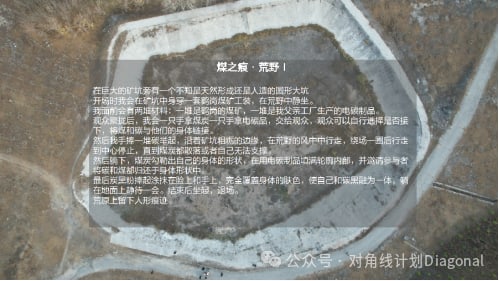
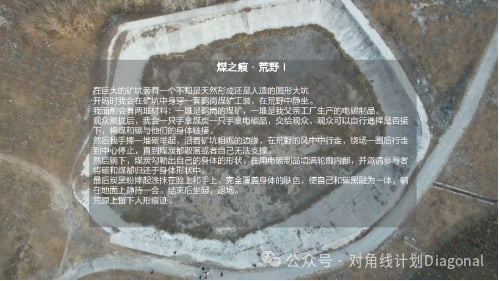
在巨大的矿坑旁有一个不知是天然形成还是人造的圆形大坑。
开场时我会在矿坑中身穿一套鹤岗煤矿工装,在荒野中静坐。
我面前会有两堆材料:一堆是鹤岗的煤矿,一堆是我父亲工厂生产的电碳制品。
观众聚拢后,我会一只手拿煤炭一只手拿电碳品,交给观众,观众可以自行选择是否接下,将煤和碳与他们的身体链接。
然后我手捧一堆碳举起,沿着矿坑粗粝的边缘,在荒野的风中中行走,绕场一圈后行走到中心停止,直到煤炭都散落或者自己无法支撑。
然后躺下,煤炭勾勒出自己的身体的形状,在用电碳制品填满轮廓内部,并邀请参与者将碳和煤都归还于身体形状中。
最后炭黑粉捧起涂抹在脸上和手上,完全覆盖身体的肤色,使自己和碳黑融为一体,躺在地面上静待一会。结束后坐起,退场。
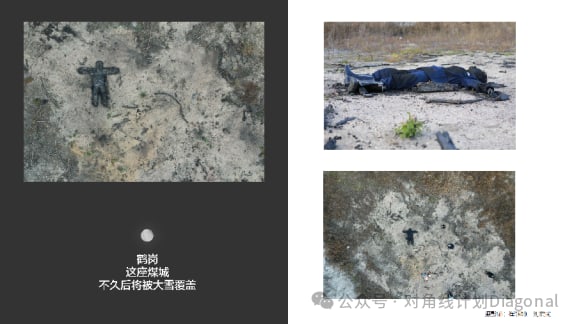
荒原上留下人形痕迹。
空间与材料布局
地图以矿坑为中心,呈现以下空间与材料的布置:
1. 矿坑边缘
行走路径用散落的煤炭标记,形成一条粗粝、破碎的线条。
2. 中央圆形坑
在黑白“八卦形”坑的白色区域中心开展,为下一次作品在黑色区域开展铺垫
3. 材料堆放点
两堆材料(煤与电碳制品)靠近圆坑边缘放置,与观众形成交接点。
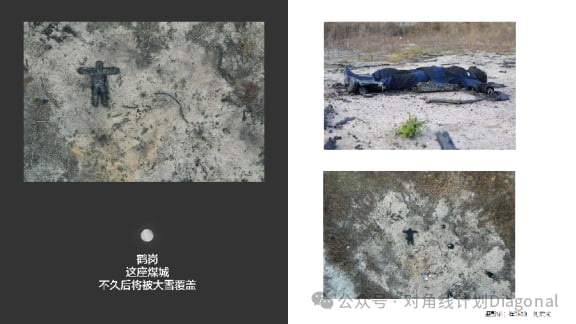
4.人形痕迹
身体躺下后形状遗留的位置,在白色部分显眼且不久后会被白雪覆盖。
预先创作观念与设定
1.矿坑选址与场域叙事
场地选在鹤岗国家矿山公园的矿坑旁,这一地形既具有强烈的象征意义,也提供了广阔的视野和独特的地理特征。矿坑作为煤矿遗址的直接象征,承载着工业历史的深刻叙事,与作品核心主题“煤之痕”高度契合。
场地中自然或人造的圆形大坑成为活动的中心,其周围呈现出一种荒凉破败的“荒野”状态。作品以“荒野”命名,不仅指代场地的地貌,也暗示着人在浩瀚自然面前的渺小与无力。更有趣的是,这片土地的颜色形成了奇特的对比:一半为黑色焦土,一半为白色干土,形似太极八卦图。这样的偶然巧合正呼应了作品中对生命轮回与历史沉积的探讨。
表演在“白色”土地上展开,黑色炭质勾勒出的痕迹显得格外醒目。这一设定不仅强化了视觉对比,也隐喻了个体在时间和历史长河中留下的印记。荒野与矿坑作为作品的背景,为其赋予了强烈的历史感和地理象征意义。表演者的行为与环境的互动进一步强调了时间与空间的不可逆性,使艺术创作成为自然与人类对话的媒介。在这个场域中,观众、表演者与大地形成了深度的三维互动。
2.煤与电碳的对话:自然与工业的交织
煤矿来源于自然,是工业发展的基础资源,而电碳制品则是人类从煤炭提取后深加工的结果。这两种材料既是一脉相承,又象征了“自然人类工业”之间的对立与统一。
煤炭和电碳制品不仅是物质的存在,更承载了劳动的痕迹、资源的消耗,以及工业化对自然与生命的侵蚀。在作品中,煤矿与电碳制品分别代表天然与人造、过去与未来、非人类与人类、共同体与消费社会之间复杂的关联与对抗。
通过将煤炭与电碳制品交给观众,作品试图建立起材料与身体、材料与人类历史的直接连接。观众不仅是“接收者”,也是“参与者”,通过触摸和感受这些材料,重新审视它们与个体生活的关系。这种“煤与电碳的对话”不仅是自然资源的隐喻,更是关于人类历史和社会发展的反思。
3.从触摸开始的参与:感官的唤醒与内在反思
观众通过触摸和接触材料,成为作品的一部分。这种互动模式突破了传统表演的“观赏性”,转而激发一种更深层次的参与与介入。
这一创作手法植根于我的实践理念——以“格物”的方式,引导人们重新感知那些日常生活中被忽视的物质。煤矿作为支撑无数人生存的重要资源,却往往缺乏直接的身体体验。很少有人真正去观察或触碰它,从而感知其质感、重量,甚至是象征意义。因此,我通过一种近乎“强迫”的方式,邀请观众持有并触摸煤炭与电碳制品,激发他们去观察、反思这些材料与自身生活的关系。
触摸不仅是一次感官体验,更是一次情感与记忆的唤醒。这些材料带有劳动的痕迹与历史的重量,当观众接触它们时,不仅在身体层面感知材料的温度与质感,更可能在心理层面重新审视人与材料、人与社会的微妙关联。
通过这一互动,我希望触发观众对自身处境和社会环境的思考,也为材料赋予新的叙事维度。最终,这种“拥有”与“丢弃”的行为成为个体与历史对话的一部分,为作品的叙事性和开放性注入了更多可能。
4. 表演的动态进程
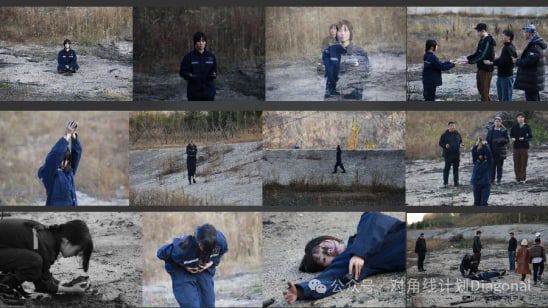
静坐:沉思与凝聚
表演开场以静坐开始,象征着沉思与沉淀,同时通过材料交接的行为邀请观众以身体体验参与历史叙事,打破艺术与观众之间的界限。在杂乱的自然环境中,观众往往难以迅速进入状态,而我的静坐旨在吸引注意力,并将现场的能量逐渐聚焦于我的肉体存在上。这一过程不仅是身体的静止,更是能量的凝聚,为接下来的互动和行为奠定了基础。
分发材料:自主选择与观众主体性
在材料分发环节,我将煤矿和电碳制品交到观众手中,赋予他们选择的权利。煤矿作为自然材料,象征原始与未加工;而电碳制品则代表人工改造的工业成果。这种自然与人工的关联性在每一位观众的选择中都激发了不同的感受。 有趣的是,几乎每位参与者都选择了持有材料。随后,我邀请他们将材料归还到我的人形痕迹上。观众可以自由决定放置的位置,这一行为强调了观众在作品中的主体性——他们不仅是被动的观察者,更是主动的塑造者。这一过程引导他们在互动中感知材料与自身生活的联系。
行走与散落:脆弱与遗留
互动结束后,我开始沿矿坑边缘行走。这个劳动的过程也是对煤矿工人辛苦劳作的致敬。 我的行走过程漫长且艰难,观众与我的距离被刻意拉远,突显了劳动者与他者之间的关系。散落的材料随风飘落,有些停留在我的头上和身上,有些洒落在矿坑边缘的白色斜坡上,形成这一过程象征着时间的流逝与个体生命的脆弱。因服装和地形复杂,煤炭不断从我身上散落,留下碎片勾勒出我的存在痕迹。这些散落的煤炭不仅是劳动的隐喻,也是历史的遗留。自然与工业、人类与环境之间的张力。
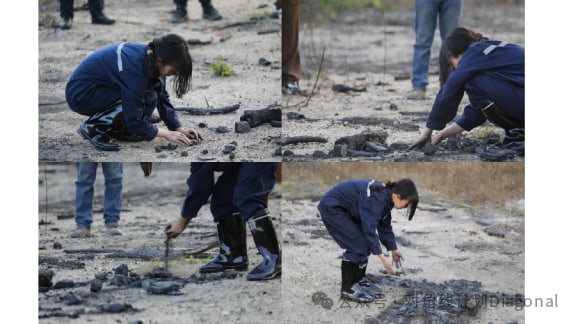
躺卧与形状重构:生命的印记
躺卧在荒野之中,我用煤矿材料勾勒出身体的形状,邀请观众参与填充。这一行为进一步强调“遗留”的概念——不仅是身体的遗留,更是情感与历史的印记。 这一部分与我过往作品《盐之痕·潮汐》相关联,延续了在人类与土地之间留下印记的创作理念。将人工开采的煤炭与电碳重新归还大地,既回应了矿坑这一场地特性,也象征了自然与人类关系的循环与复归。
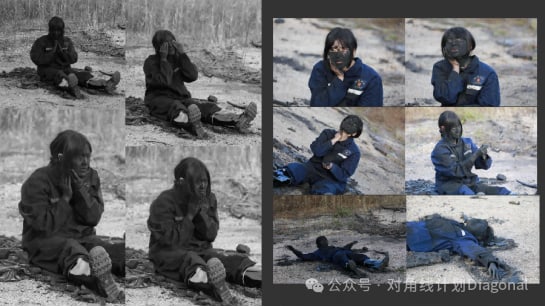
炭黑涂抹:自我与材料的同一性
用炭黑覆盖全身的行为是对自我与煤炭材料同一性的表达。煤炭劳作对身体的塑造及生命的消耗,在这一过程中被具象化。炭黑与肤色的统一,隐喻着个体在宏大叙事中的消解与融入。 作为煤炭工人后代,我的生命与煤炭材料之间有着深刻的联系。我将身体裸露的部分全部涂黑,将自己与煤炭这一象征性材料连接,形成一体。这不仅是对个体身份的回应,更是对人类赖以生存的自然资源的深刻致敬。
平躺与融合:最终的归属
表演的最后,我平躺在用煤炭勾勒出的黑色人形上,象征着与土地的融合。我将自己的身体与人形痕迹融为一体,贴近大地,象征煤炭作为自然的一部分回归土地的怀抱。 当我离场后,地面上仅留下黑色的人形痕迹。这一痕迹在荒野的白色背景中尤为突出。随着时间流逝,一个月后,这片土地被大雪覆盖,痕迹形成新的黑白关系,再次回应了自然轮回与历史沉积的主题。
成果与意想不到的发现
1.即兴动作设计
在创作过程中,很多动作并未完全按照预期展开,反而带来了新的灵感。例如,由于工装为男款,,鞋靴过大且煤矿不断掉入鞋内,行走变得异常困难。这种限制感使得动作更加真实地传达了艰辛和挣扎的意象。这种非预期的肢体限制不仅丰富了作品的叙事性,也增加了身体与材料之间的对抗感。此外,我在表演中加入了一个临时设计的动作:召集观众参与,将煤炭和电炭进行“回归”的行为。这种即兴的举动强化了作品的互动性与开放性。
2.观众的状态与位置
观众的站位和行为让我意识到他们对作品的独特影响。创作过程中,我感受到观众的行为和位置呈现了无意中的“集体性”。首次接触行为艺术的观众,往往站成一排,像工厂中早晨集会的工人整齐排列。这种“服从性”让我反思行为艺术的力量,不仅在于艺术家与观众的互动,还在于揭示社会中的无形规训。观众的集体性站姿,使得作品意外地触及到劳动者与工业化背后的文化符号。这种自发的“排兵布阵”强化了我对集体性与个体服从关系的思考,也让我重新审视观众在行为艺术中的角色。
3.交流会:参与者的视角与主体选择
在作品现场的次日讨论中,每位观众都分享了自己独特的体验与感受。例如:
一位女性观众认为自己“被召唤”,主动投入并希望“奉献”自己。主动参与材料的持有和放置;
有人提到自己受到群体压力的影响,在从众与反抗间犹豫,尽管内心有抵触和害怕,但仍选择参与。还有人感受到无声权力的施压,尽管我未直接命令,仍不由自主地被吸引
一位人类学博士说他感受到无声权力的施压,尽管我未直接命令,仍不由自主地被吸引加入。他联想到了政治在集体中常用手段,这种隐含在社会形态中的一种无声的权力规训,在无形的“对峙”中不由自主被牵引。
还有人还有人因好奇心而积极参与,并乐在其中。
此外,一些观众展现了独特行为,例如拾起现场烧焦的木炭并加入到我的创作中。
还有一些观众保持冷眼旁观,在遥远的地方驻足观看。
当地博主开启了线上直播,线上也拓展出不同的观众反应。
这种多样性让我重新认识参与行为艺术的潜能——观众不仅是被动的旁观者,他们的心理状态、选择行为,甚至手中材料的放置,都深刻影响着作品的表达方向。
4交流会:如何去观看和理解行为艺术?
交流中有观众提出如何快速理解先锋性的当代艺术作品。我分享了我的看法:“观看艺术其实是观众自身内心世界的映射,所以不需要去理解和懂得什么是作品。与其试图理解和懂得创作者的“想法”,不如通过作品反思自己的兴趣与内心。例如,每个观众通过自己的视角所见即为他们独特的“作品”。通过这个作品去思考和延伸到你自己感兴趣的那个部分,这种个人化的解读方式拓宽了作品的意义边界。你是谁,你见到的就是什么。”
5交流会:行动与政治事件的延伸联想
令人意想不到的是,一位本地居民将作品联想到2015年煤矿行业破产导致工人街头静坐抗议的历史事件,并询问是否在向这一事件致敬。他这让我意识到,尽管我创作时未了解此事,观众的联想为作品注入了新的历史与政治维度。这种联想触发了我对中国政治事件与个体抗争的进一步思考——个体的身体抗争如何映射集体的牺牲,以及工业资本对个体命运的塑造。这一讨论让我意识到,本地创作者可能会因情感上的屏障回避直面煤矿的痛苦主题,而作为“局外人”的我却能以更直观的视角激发观众重新审视记忆与情感。
6交流会:体验感无限可能
观众在互动中通过返还材料加入到创作过程。这种行为从即兴变为作品的核心部分,让观众从“客体”转变为“主体”。例如,有人选择将材料放在“心脏”或“头部”位置,这种行为让他们从旁观者变成了创作者的一部分。同时,这种主动参与性延展了作品的多重意义?:他们的反馈让我意识到,每位观众都在再创作,通过互动产生了“不同的作品”。这种现场互动让我意识到,行为艺术的现场体验具有无限可能性。观众对作品的解读和贡献,不仅是作品的一部分,更为未来的创作提供了宝贵的灵感和反馈。
对未来创作和研究的影响
深化观众参与,增强互动性体验
在未来的创作中,将进一步强化观众的参与感,让他们不仅是旁观者,更是创作的合作者。例如,通过邀请观众堆砌、书写或重构煤炭等材料,赋予他们主动权,从而创造更多元的叙事层次。通过设计互动环节,让观众在触碰、操作材料的过程中,产生情感与思考的双重共鸣,探索作品与个体内心深处的连结。
拓展空间叙事,融合多重媒介
未来的创作将更加注重空间的叙事潜力,通过影像、声音记录与现场动态变化的结合,塑造情感更为丰富的艺术体验。这种空间性叙事不仅能触及观众的感官,还能激发他们对历史与社会记忆的共鸣,让作品成为承载集体与个体经验的媒介。
深化材料实验,延续自然与工业的对话
材料将成为未来创作研究的核心之一,特别是围绕煤炭及其他工业材料,探讨它们在艺术语境下的可能性。通过材料的再生与多重运用,将工业化与自然之间的张力转化为可感知的艺术语言,赋予创作更深层次的生态与社会意义。
关注艺术的开放性与生命力
行为艺术的即兴与开放性特质将被持续探索,包括如何在创作中预留空间,让观众、现场和材料共同生成新的作品意义。观众的多样反应和行为启示了创作者:作品不仅限于表演现场,而是通过观众的介入得以延续其生命力,成为不断变化的动态过程。
关注社会与历史记忆,推动艺术介入社会
观众的联想与讨论揭示了作品与社会、历史事件之间的潜在连接。未来将更加关注如何通过创作触及社会问题,如个体与集体、劳动与资本、权力与对抗等主题。以局外人的视角直面地方性历史与心理屏障,同时激发本地观众重新审视自己的记忆与情感,探索艺术作为社会对话平台的潜力。
多维体验与反思,突破单一解读
艺术创作将在互动中延展意义,不同观众对作品的理解与行为会产生多重维度的延伸。未来研究将聚焦于如何捕捉和呈现这种多样性,避免单一解读的局限。通过邀请观众介入作品的重构,进一步探讨创作者、观众与材料之间的动态关系,生成关于艺术、个体与社会的深层对话。
彭玮雯
Vivienne Peng
普利茅斯大学当代艺术在读博士生,四川美术学院实验艺术专业硕士, “对角线计划Diagonal”联合发起人。四川自贡盐厂与三线电碳厂的工人后代。
实验艺术家,现目前运用行为,装置,影像与新媒体等跨媒介语言进行在地性艺术创作。主要创作材料为盐、煤炭、炭黑与工业废弃材料。博士课题研究从东北到西南的后国营工业社区的社会介入性艺术。关注中国建国时期的东北工业到三线建设时期的西南之后的当代工业叙事,探索个体生命溯源与地方性社群文化的生态与关联。流动居住于英国,欧洲与中国。
In 2024, the "The Diagonal" will officially meet the public, and we have organized and planned various types of activities, exhibitions, inspections, and dialogues in this year, and from today onwards, we will launch the "The Diagonal 2024 Retrospective Series", we will continue to launch articles summarizing and recording the important projects done this year, and continue to share and discuss relevant issues and phenomena with you in different forms of texts, some of which are bilingual in Chinese and English for communication.
Today's article is the second review of the creation of the "Black and White Series" by Peng Weiwen, the co-founder of the "Diagonal ".
Creation Context of "Black and White" (Coal and Salt) and the Latest Art Project
Creative Concept
Carbon and salt, one from my father and one from my mother, who both worked in the carbon and salt factories. These two elements are deeply connected to both me and my family. Like the balance and interplay between black and white in the Eight Diagrams, they are linked to my memories of the past and future, as well as the constant connection between the physical body and nature. These two materials, which have been buried underground for millions of years, also inscribe time.
They not only represent remnants of industrial production but also carry the weight of personal and collective memories. By using carbon and salt as primary materials, I respond to the deep connection between personal and family history and industrial heritage. This series of works explores how these elements resonate with the history and environment of specific places through live performances and public installations.
The carbon and salt used in the project are not just creative materials; they also symbolise the complex relationship between personal history, industrial heritage, and natural forces. Through transformation and disappearance at specific sites, these materials echo the passage of time and the transformation of matter, validating the deep connection between humans and nature, the past and the future.
Black series
Traces of coal·Wilderness I.
Materials: tooling, coal, carbon powder, electric carbon product waste
Art scene:"I don't have name, just want to make an art scene for Hegang and the coal city"
Site location: Hegang National Mining Park, Hegang City, Heilongjiang Province, China
On-site time: 2024.10.13 14pm
Creative Concept
From Fushun to Hegang, two cities built on coal, this journey traces the origins of my life. I communicate with the earth using coal and carbon black.
The carbon products made from carbon black represent my father’s lifelong pursuit of production, while my own body, as a child, is also a product.
Coal is carbon, carbon is me, and I am coal.
The abandoned mines remain in the vast wilderness, becoming unique manmade landscapes.
This is a dialogue with materials, the self, time, nature, and life.
In the end, I hope to leave behind the traces and contours of time in this remote city.
Performance Process
Next to a large mine pit, there is a circular depression, its origin uncertain, whether natural or manmade.
At the start, I sit silently in the pit, wearing Hegang coal mine workwear.
In front of me, there are two piles of materials: one from the Hegang coal mine and the other from my father’s factory producing electrical carbon products.
As the audience gathers, I will hold a piece of coal in one hand and a carbon product in the other, offering them to the audience. They may choose whether to take them, linking coal and carbon to their own bodies.
Then, I will hold a pile of carbon in both hands and walk around the rough edge of the pit, in the wilderness wind. After completing a circle, I will stop at the centre, until the coal scatters or I can no longer hold it.
I will then lie down, letting the coal outline my body’s shape, filling the outline with the electrical carbon products, and invite participants to return both the coal and carbon back into the body’s form.
Finally, I will scoop up carbon powder, apply it to my face and hands, covering my skin entirely, merging with the carbon black. I will lie on the ground, waiting for a moment. Afterward, I will sit up and leave the site.
Humanshaped marks will remain on the wilderness floor.
Space and Material Layout
The map centres around the mine pit, with the following spatial and material arrangements:
1. Edge of the Mine Pit
A rough, fragmented line of scattered coal marks the walking path.
2. Central Circular Pit
A “blackandwhite” Taijishaped pit, with the white area at the centre marking the next performance.
3. Material Piles
Two piles of materials (coal and carbon products) placed near the edge of the pit, forming a point of contact with the audience.
4. Humanshaped Traces
After the body lies down, its shape will be left in the white section, soon to be covered by snow.
PreCreation Concept and Setup
1. Mine Pit Location and Narrative
The location is by the mine pit in Hegang National Mine Park. This terrain holds strong symbolic meaning and offers a broad view and unique geographical features. The mine pit, as a direct symbol of the coal mining heritage, carries profound historical significance, aligning perfectly with the core theme of the work, "The Marks of Coal."
The natural or manmade circular depression becomes the heart of the performance, surrounded by a desolate “wilderness” state. The title “Wilderness” refers not only to the landscape but also hints at human smallness and helplessness before nature. Interestingly, the land’s colour forms a strange contrast: half blackened earth and half white dry soil, resembling a Taiji symbol. This fortuitous coincidence echoes the exploration of life cycles and historical accumulation in the work.
The performance takes place on the “white” land, where the black carbon marks stand out vividly. This arrangement enhances the visual contrast and metaphorically represents the marks individuals leave on the river of time and history. The wilderness and mine pit as the backdrop imbue the piece with a strong sense of history and geography. The interaction between the performer and environment underscores the irreversibility of time and space, making the art a medium for dialogue between nature and humanity. In this space, the audience, performer, and land engage in a profound threedimensional interaction.
2. The Dialogue between Coal and Electrical Carbon: Intertwining Nature and Industry
Coal comes from nature, serving as the foundation for industrial development, while electrical carbon products are the result of human deep processing of coal. These two materials are interconnected yet represent the conflict and unity between "naturehumanindustry."
Coal and electrical carbon products are not only physical substances but also carry the traces of labor, resource consumption, and the erosion of nature and life by industrialisation. In the work, coal represents the natural, while electrical carbon products symbolize the manmade, past and future, nonhuman and human, community and consumer society—complex relationships and oppositions.
By offering coal and electrical carbon products to the audience, the work aims to directly connect materials with bodies and human history. The audience is not only a “receiver” but also a “participant,” invited to touch and feel these materials, reexamining their relationship with their own lives. This “dialogue between coal and electrical carbon” is not just a metaphor for natural resources but also a reflection on human history and social development.
3. Participation through Touch: Awakening the Senses and Inner Reflection
The audience becomes part of the work by touching and interacting with the materials. This mode of interaction goes beyond traditional performance viewing, triggering deeper participation and involvement.
This creative method is rooted in my practice philosophy, “to study the objects,” guiding people to reperceive materials often overlooked in daily life. Coal, as a vital resource for countless lives, is rarely experienced physically. Few people truly observe or touch it, thus failing to sense its texture, weight, and even its symbolic meaning. Therefore, I invite the audience to hold and touch coal and electrical carbon products, encouraging them to observe and reflect on their relationship with these materials.
Touch is not only a sensory experience but also a call to emotion and memory. These materials carry the marks of labor and the weight of history. When the audience engages with them, they not only sense the materials’ temperature and texture but may also reconsider the subtle connections between people, materials, and society.
Through this interaction, I hope to trigger the audience’s reflection on their own circumstances and the social environment, offering new narrative dimensions to the materials. Ultimately, this act of “holding” and “discarding” becomes part of the dialogue between individuals and history, adding layers of possibility to the work’s narrative and openness.
4. The Dynamic Process of the Performance
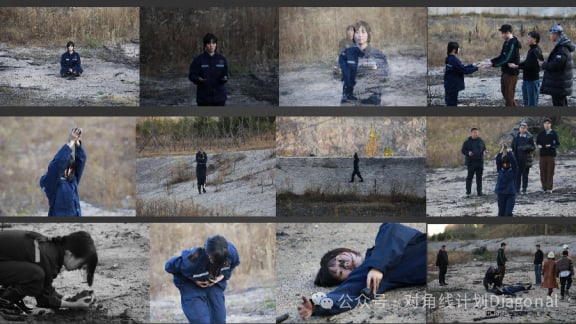
Sitting in Silence: Contemplation and Concentration
The performance begins with a period of stillness, symbolising contemplation and settling, while inviting the audience to physically engage with the historical narrative through the exchange of materials. This act breaks the boundary between art and the audience. In the chaotic natural environment, it is often difficult for the audience to quickly immerse themselves in the experience, so my stillness serves to draw attention and gradually focus the energy on my physical presence. This process is not just physical stillness but also the gathering of energy, laying the foundation for the subsequent interactions and actions.
Distributing Materials: Autonomy and Audience Subjectivity
During the distribution of materials, I hand pieces of coal and electrocarbon products to the audience, granting them the right to choose. Coal, as a natural material, represents the primitive and unrefined, while electrocarbon products signify humanmade industrial achievements. The relationship between the natural and artificial is activated through each individual's choice, evoking different emotions.
Interestingly, almost every participant chose to hold the materials. I then invited them to return the materials to my humanlike markings, allowing them to decide where to place them. This act emphasises the audience's agency within the work—they are not mere passive observers but active creators. This process encourages them to sense the connection between the materials and their own lives through interaction.
Walking and Scattering: Fragility and Legacy
After the interaction, I began walking along the edge of the mine. This act of labour is also a tribute to the hard work of coal miners.
The walk was long and arduous, deliberately distancing the audience from me, highlighting the relationship between the labourer and the other. The scattered materials fell with the wind, some landing on my body, others scattered along the white slopes at the edge of the mine. This process symbolises the passage of time and the fragility of individual life. The coal continually fell from my body, leaving fragments that outlined my presence. These scattered pieces not only metaphorically represent labour but also the remnants of history—the tension between nature and industry, humans and the environment.
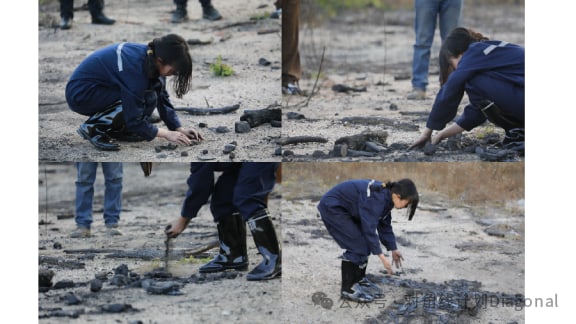
Reclining and Shape Reconstruction: Imprints of Life
Lying in the wilderness, I outlined the shape of my body with coal, inviting the audience to participate in filling it in. This act further emphasises the concept of "legacy"—not just the remnants of the body, but also the imprints of emotion and history.
This section connects with my previous work Traces of Salt: Tides, continuing the concept of leaving marks between humans and the land. Returning artificially mined coal and electrocarbon to the earth not only responds to the site’s characteristics but also symbolises the cyclical and returning relationship between nature and humanity.
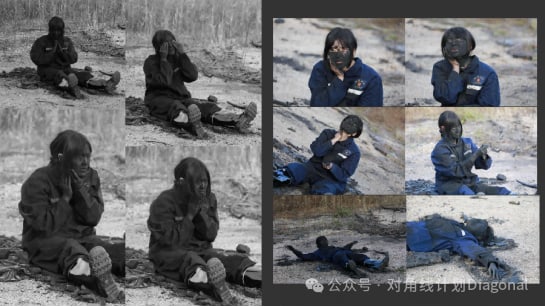
Charcoal Smearing: The Unity of Self and Material
The act of covering my body with charcoal is an expression of the unity between myself and the coal material. The physical toll and the depletion of life through coal work are concretised in this process. The blending of charcoal and skin tone metaphorically represents the dissolution of the individual within a grand narrative.
As a descendant of coal miners, my life is deeply connected to coal. I cover all exposed parts of my body with charcoal, linking myself to this symbolic material, creating a unified whole. This act is not only a response to individual identity but also a profound homage to the natural resources on which humanity depends.
Lying Down and Merging: Final Belonging
At the end of the performance, I lie on the black human figure outlined with coal, symbolising the merging with the earth. By merging my body with the human shape, I symbolise the return of coal to the earth, embracing the land as part of nature.
When I leave the scene, only the black humanshaped imprint remains. This mark stands out against the white background of the wilderness. As time passes, a month later, the land is covered with snow, and the mark creates a new blackandwhite relationship, responding once more to the cyclical nature of the earth and the sedimentation of history.
Outcomes and Unexpected Discoveries
1. Improvised Movement Design
Many movements in the performance did not unfold exactly as planned, instead sparking new ideas. For example, the workwear was malesized, and the boots were too large, causing coal to fall into my shoes, making walking difficult. This sense of restriction allowed the movements to more authentically convey hardship and struggle. This unintended bodily limitation not only enriched the narrative of the piece but also heightened the sense of confrontation between the body and the material. Additionally, I added an impromptu action: inviting the audience to return the coal and electrocarbon, strengthening the work's interactivity and openness.
2. The Audience's State and Position
The audience's positioning and actions made me realise their unique impact on the work. I noticed that during the performance, the audience often arranged themselves in a line, much like factory workers gathering in the morning. This "compliance" made me reflect on the power of performance art—not just in the interaction between the artist and the audience but also in revealing the invisible discipline in society. The audience's collective stance unexpectedly touched on cultural symbols of workers and industrialisation, intensifying my reflections on the relationship between collective and individual obedience.
3. Post-Performance Discussion: Audience Perspectives and Subjective Choices
During the discussion the day after the performance, each audience member shared their unique experiences and impressions. For example:
One female viewer felt "summoned" and eagerly contributed, wanting to "offer" herself by actively holding and placing the materials.
Some mentioned feeling influenced by peer pressure, hesitating between conformity and resistance, and despite feeling uncomfortable or fearful, chose to participate.
An anthropologist expressed how he sensed the pressure of invisible power, despite my lack of direct command, and was drawn to join. He connected this to political tactics often used in collective settings, acknowledging the subtle power dynamics in social structures that led him to feel an unconscious pull.
Another participant joined out of curiosity, enjoying the experience.
Some viewers exhibited unique behaviour, such as picking up the burnt charcoal and adding it to my work.
Others remained distant, watching from afar.
A local blogger livestreamed the event, expanding the audience’s reactions online.
This diversity helped me realise the potential of performance art, where the audience is not merely passive observers but their psychological states, actions, and the placement of materials deeply influence the direction of the work.
4. Post-Performance Discussion: How to View and Understand Performance Art?
One audience member asked how to quickly understand avantgarde contemporary art. I shared my perspective: "Watching art is actually a reflection of the viewer's inner world, so there’s no need to fully comprehend the piece. Instead of attempting to understand the creator's 'intentions', reflect on your own interests and emotions through the work. Each viewer's interpretation is their unique 'work'. By thinking about and extending it to the aspects that resonate with you, this personalised interpretation broadens the boundaries of the work’s meaning. Who you are is what you see."
5. Post-Performance Discussion: The Action and Political Associations
Unexpectedly, a local resident linked the performance to the 2015 coal industry bankruptcy, which led to workers' sitin protests, and asked if I was paying tribute to that event. This made me realise that, even though I wasn’t aware of this historical event when creating the work, the audience's association injected new political and historical dimensions into the piece. This reflection triggered further thoughts on individual resistance, collective sacrifice, and how industrial capitalism shapes individual fate. It also made me aware that, as an outsider, I might have been able to evoke a more direct perspective on the pain of coal mining, prompting local creators to potentially avoid confronting the subject due to emotional barriers.
6. Post-Performance Discussion: The Infinite Possibilities of Experience
In the interaction, the audience contributed to the creative process by returning the materials. This action, initially improvised, became a core element of the work, transforming the audience from "objects" to "subjects". For example, some chose to place materials at the "heart" or "head," turning them from observers into active participants. This involvement expanded the work's meaning, making each interaction a new form of creation. I realised that performance art's live experience holds infinite possibilities. The audience’s interpretation and contribution are not just part of the work but provide valuable inspiration and feedback for future creations.
Impact on Future Creations and Research
Deepening Audience Engagement and Interaction
In future works, I will further enhance audience participation, making them not just spectators but collaborators. For example, by inviting the audience to stack, write, or reconstruct materials such as coal, I will give them more agency, creating diverse narrative layers. Through interactive segments, I hope to evoke emotional and intellectual resonance, exploring the connection between the work and the audience’s inner world.
Expanding Spatial Narrative and MultiMedia Integration
Future works will place greater emphasis on the narrative potential of space by integrating video, sound recordings, and dynamic changes onsite to create a richer emotional experience. This spatial narrative can engage the audience’s senses and foster resonance with collective and individual historical memories, turning the work into a medium for shared experiences.
Material Experiments and Continuing Dialogue Between Nature and Industry
Materials will remain central to future creations, particularly coal and other industrial substances, exploring their artistic potential. Through material regeneration and multilayered use, I aim to transform the tension between industrialisation and nature into a tangible artistic language, imbuing the work with deeper ecological and social significance.
Focus on the Openness and Vitality of Art
The improvisational and open nature of performance art will continue to be explored, including how to create space in the work for the audience, environment, and materials to jointly generate new meanings. The diverse reactions and actions of the audience inspire the creator: the artwork is not limited to the performance itself but, through audience involvement, continues its vitality and becomes a constantly evolving dynamic process.
Focus on Social and Historical Memory, Promoting Art's Engagement with Society
The associations and discussions sparked by the audience reveal the potential connections between the artwork and social or historical events. Future work will place greater emphasis on addressing social issues such as individuality and collectivity, labour and capital, power and resistance. By approaching local history and psychological barriers from an outsider's perspective, art can stimulate local audiences to reexamine their memories and emotions, exploring the potential of art as a platform for social dialogue.
Multidimensional Experience and Reflection, Breaking Through Singular Interpretations
Artistic creation will expand in meaning through interaction, with different viewers generating multiple interpretations through their understanding and actions. Future research will focus on capturing and presenting this diversity, avoiding the limitations of a single interpretation. By inviting the audience to engage in the reconstruction of the work, the dynamic relationship between the creator, the audience, and the materials will be further explored, fostering a deeper dialogue about art, individuals, and society.
Vivienne Peng
She is a PhD candidate in contemporary art at the University of Plymouth, a master's degree in experimental art at Sichuan Fine Arts Institute, and a co-founder of the Diagonal Project. Descendants of workers at the Zigong Salt Factory and the Third Line Electric Carbon Plant in Sichuan.
She is an experimental artist who currently uses cross-media languages such as performance, installation, video and new media to create local art. His main materials are salt, coal, carbon black and industrial waste materials. The Ph.D. project examines the art of social intervention in post-state industrial communities from the Northeast to the Southwest. Focusing on the contemporary industrial narrative from the northeast industry during the founding of the People's Republic of China to the southwest during the third-line construction period, and exploring the ecology and relationship between individual life tracing and local community culture. He has lived in the UK, Europe and China.
文章正文Article
彭玮雯Vivienne Peng
编辑校对Editor
孙晓鸣kerribin
“对角线计划”2024年发起和参与的主要活动
The main activities of the "Diagonal " in 2024
"Space Pioneer - Factory, City and Youth (Northeast Contemporary Art Youth Exhibition)" opened
Upcoming Events & Exhibitions (September-October)
展览预告|见证东北工业荣耀与没落——不容错过的文化保育概念展
Exhibition Preview|Witness the glory and decline of Northeast industry - a cultural conservation concept exhibition not to be missed
十一活动|从钢铁洪流到诗歌深处:张笃德分享会&同时代东北读书会与你相约
October 1st Festivel Activity|From the Torrent of Steel to the Depths of Poetry: Zhang Dude Sharing Meeting & Contemporaneous Northeast Reading Club Meet You
Connectivity: Talk to Dr. Siyu about the house and home (Hegang offline)
After Ready-Made (Improvisational Activity)
Dialogue: Old Relationships and New Friends – From Fuxin to Hegang
I don't have name, just want to do an art scene for Hegang and the coal city
【beline】Introduction of the members of the "Little Salt Girl" project.
Curator Salon|A Discussion on Local Curation in Northeast China to Cross-regional Art Projects (Shenyang)
“对角线计划”2024年策划与参与的展览
"Diagonal Project" 2024 curated and participated in exhibitions
"Space Pioneers - Factory, City and Youth" exhibition artists and some of their works are introduced
展览预告|见证东北工业荣耀与没落——不容错过的文化保育概念展
Exhibition Preview|Witness the glory and decline of Northeast industry - a cultural conservation concept exhibition not to be missed
第十届iSTART参展全名单公布!感恩礼早鸟票限量上线!(文末有礼)
The full list of exhibitors for the 10th iSTART has been announced! Thanksgiving early bird tickets are available in limited quantities! (Courtesy at the end of the article)
对角线计划Diagonal
对角线计划,缘起从东北到西南的身体游走,游走构成了中国版图上一条从“草原森林平原”地区到“山地高地”地区的对应线,这条线也与当年胡焕庸的从东北黑河到西南腾冲线呼应。从自然地理到人文经济,从近百年前到当代社会,从农业传统到工业繁荣,我们试图寻找和关联共同的意象、符号、理念与精神,以艺术的形式呈现两个地区的多样风貌,实践与理论结合,并尝试总结一些有效的方法,以促进和影响在地生态的演进。
对角线计划目前已经在中国东北地区的黑龙江省鹤岗市与哈尔滨市,辽宁省沈阳市、抚顺市以及西南地区的四川省成都市、自贡市与重庆市开展以工业与城市为主题的研究与当代艺术创作。
The Diagonal , which originated from the body from the northeast to the southwest, formed a corresponding line from the "grassland, forest plain" to the "mountain highland" area on the Chinese map, and this line also echoed Hu Huanyong's Tengchong line from the Heihe in the northeast to the southwest. From physical geography to human economy, from nearly a hundred years ago to contemporary society, from agricultural tradition to industrial prosperity, we try to find and relate common images, symbols, ideas and spirits, present the diverse features of the two regions in the form of art, combine practice and theory, and try to summarize some effective methods to promote and influence the evolution of local ecology.
The Diagonal has been conducting research and contemporary art on the theme of industry and city in Hegang and Harbin in Heilongjiang Province in Northeast China, Shenyang and Fushun in Liaoning Province, and Chengdu, Zigong and Chongqing in Sichuan Province in southwest China.